
From kit
to harvest.
One step at a time, with the real timings and the conditions that matter. If you have a doubt, send us a photo on WhatsApp.
Prepare
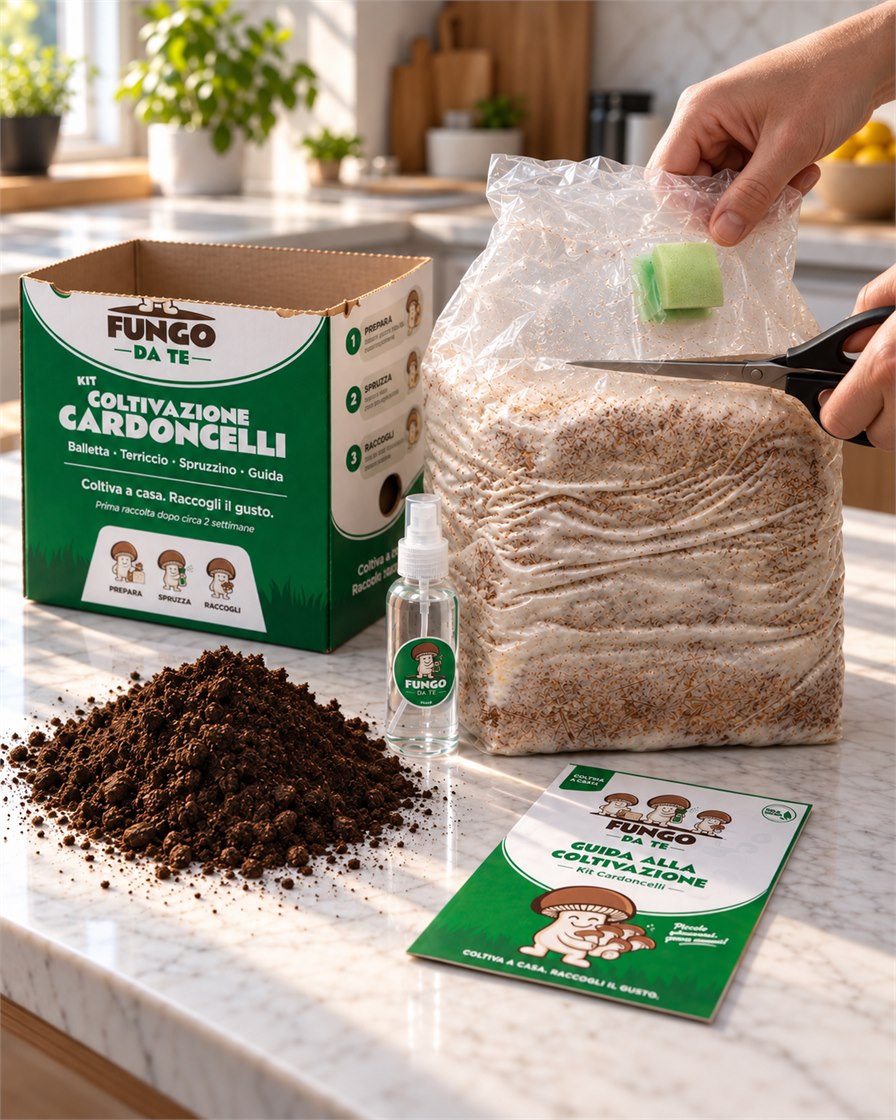
Open the box, take out the block and cut its top following the line. Spread the casing soil in an even 1–2 cm layer and mist for the first time. Place the kit somewhere cool, with indirect light.
Mist
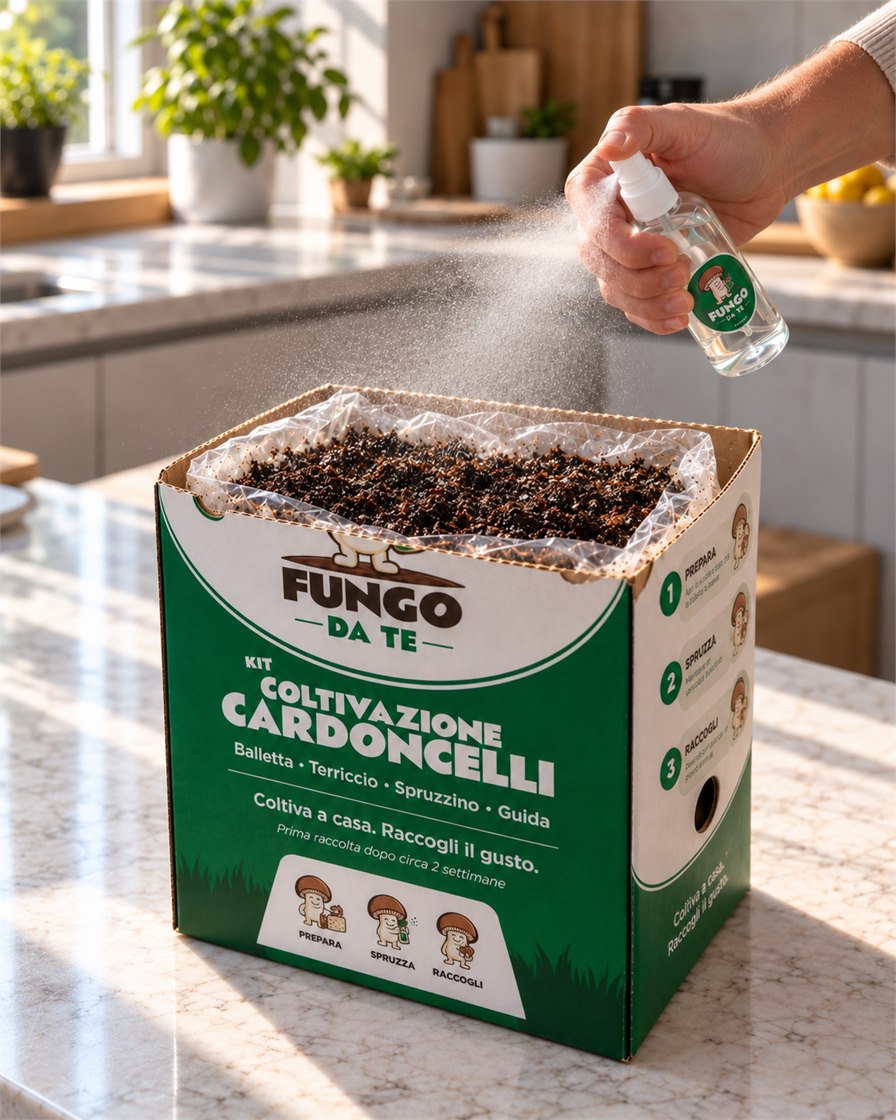
Two mistings a day, morning and evening. The surface should stay moist to the touch but not soaked: excess water is the first mistake to avoid. Air out the room once a day.
Observe
In the first few days you'll see the white mycelium colonise the surface. Then pins appear: small heads that grow quickly. From this point don't touch the surface.
Harvest
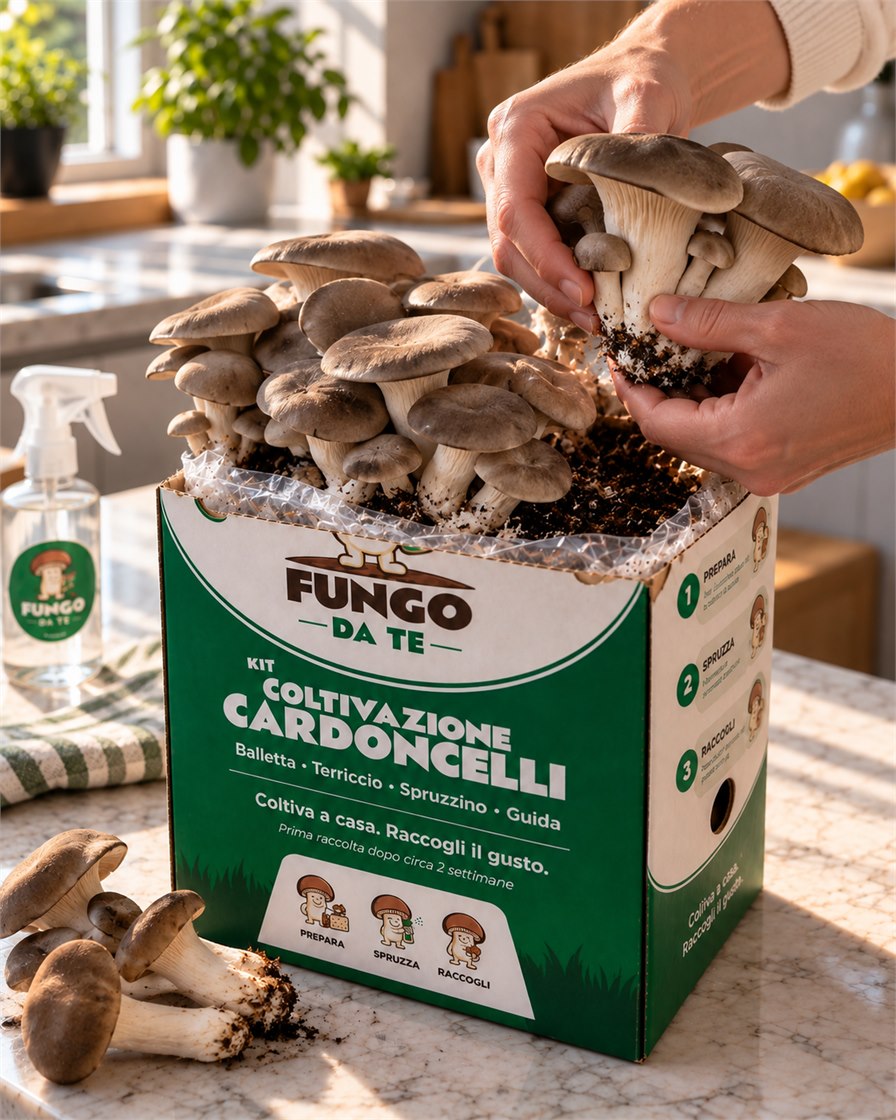
When the cap flattens out, gently twist the mushroom at the base until it comes off. Harvest the whole cluster together. First harvest after about two weeks.
Start again
After harvesting keep misting: the block usually produces 2–3 cycles. At the end of the grow, dispose of the substrate in organic waste or compost, following your local council's rules.
Frequently
asked questions.
Can't find your answer? Write to us on WhatsApp with a photo of the block.
Ask on WhatsAppDo I need experience to use the kit?
No. The block arrives already inoculated: the steps are cut, cover, mist. If you can water a plant, you're ready.
How long before the first harvest?
About two weeks in ideal conditions. Temperature and humidity affect timing: in cooler weather growth slows by a few days.
Where do I put the kit at home?
Somewhere cool at 18–20°C, with indirect light and fresh air: a kitchen, a storage room or a bright bathroom all work well. Avoid direct light and heat sources.
Nothing seems to be happening after a few days — is that normal?
If you don't see white threads spreading yet, check temperature and humidity first: below about 15°C, or in a very dry room, the mycelium slows down noticeably. Keep misting on schedule — usually a few extra days of patience is all it takes. If there's still no change after three weeks, send us a photo on WhatsApp and we'll look into it with you.
How do I tell normal mycelium from mould?
Mycelium is white, spreads evenly across the surface, and has a neutral, earthy smell. Actual mould looks different from white (green, black, pink, orange patches) or smells sharp/unpleasant. If you see either of those, or the package arrived damaged, stop and send us a photo on WhatsApp before continuing.
Am I misting too much or too little?
Two mistings a day, morning and evening, are enough. The surface should stay moist to the touch, never soaked or crusty. Standing water or a rotten smell means you're overdoing it; if the casing soil dries out and cracks between mistings, mist a little more often.
How many mushrooms do I get?
Typically 400–600 g per cycle, with 2–3 cycles per block. Yield depends on environmental conditions and how regular the mistings are.
Can I store the kit before starting?
Yes: keep the block somewhere cool (10–20°C), away from direct light, and use it by the date printed on the pack.
When do you ship?
We ship every working day, to Italy, the European Union, Switzerland and the United Kingdom, handing the parcel to the courier within 24/48 working hours of the order. From there, delivery follows the courier's own estimate — about 3-5 working days for the EU, Switzerland and the UK; islands or remote areas may take longer. Standard shipping is €5.90.
Read more on the blog
Ready to start? The kit has everything, including the printed guide.